
The Intellectual Decline of America
A Nation Unmoored from Its Roots

(Written with assistance from Grok)
In the summer of 1787, delegates to the Constitutional Convention in Philadelphia grappled with questions of governance, liberty, and human nature. Their debates, steeped in the wisdom of Locke, Montesquieu, and the classical philosophers, produced a document that has endured for over two centuries. Today, that Constitution faces threats not from foreign armies but from an electorate increasingly detached from the intellectual foundations that birthed it. Americans have grown intellectually weak, abandoning the classics, the writings of the Founding Fathers, and the study of history itself. This erosion of rigor has paved the way for the rise of Donald Trump, whose economic missteps and constitutional recklessness reflect a nation adrift.
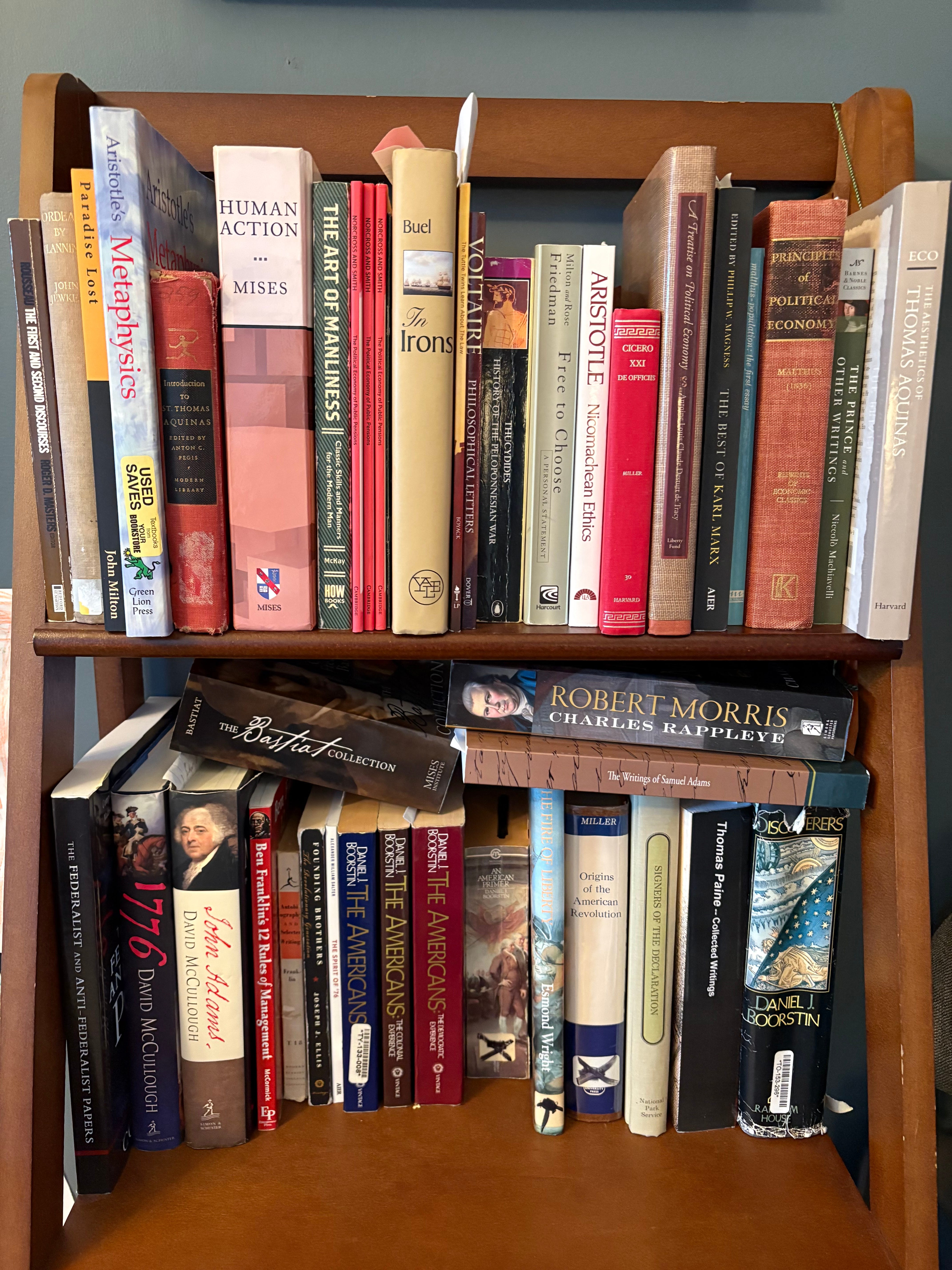
The evidence of our intellectual decline is stark. A 2023 survey by the National Endowment for the Arts found that only 11% of American adults read literature for pleasure, a sharp drop from decades past. The classics—Homer, Dante, Shakespeare—once staples of education, are now relegated to dusty shelves or dismissed as irrelevant. The writings of Madison, Hamilton, and Jefferson, which articulate the principles of limited government and individual liberty, are largely unread, even by those who claim to champion them. History, too, has become a casualty: a 2022 National Assessment of Educational Progress report revealed that only 13% of eighth graders are proficient in U.S. history, a historic low.
This intellectual void has consequences. A people unversed in the Federalist Papers or the lessons of Athens and Rome lack the tools to discern demagoguery from statesmanship. They are swayed not by reason but by spectacle, not by policy but by slogans. Enter Donald Trump, whose political ascent capitalized on this very weakness. His rhetoric, often untethered from fact or principle, resonates with an audience that no longer demands rigor. His economic policies—marked by tariff wars and ballooning deficits—reflect a rejection of the disciplined reasoning that once guided debates over trade and fiscal policy.
More alarming is the threat to the Constitution itself. Trump’s calls to suspend constitutional norms—most notably on term limits and defying court orders—betray a disregard for the principles that the Founders painstakingly codified. A populace familiar with Madison’s warnings about factionalism or Jefferson’s defense of checks and balances might recoil at such proposals. Instead, too many shrug, their indifference a symptom of ignorance about the document’s fragility. Trump’s second term has clashed with the republic’s design.
The roots of this crisis lie in our cultural and educational decay. Schools prioritize teaching to the test over substance, swapping discussions on Thucydides for Scantrons. Universities, once bastions of debate, now often stifle it, producing graduates who lack the curiosity to wrestle with hard texts or harder ideas. Meanwhile, the average American spends over seven hours a day on screens, according to a 2024 Nielsen report, and not to read the classics, leaving little time for reflection or study. While ironically we have never had easier access to the classics, we have become a nation of consumers, not thinkers, distracted by the ephemeral and indifferent to the eternal.
To reverse this decline, we must reclaim the habits of mind that built the republic. Schools should restore the classics and the Founding Fathers to their rightful place, teaching students to grapple with big ideas and uncomfortable truths. Citizens must demand more of themselves, trading TikTok scrolls for Tacitus or Tocqueville. Only by reengaging with the intellectual currents that shaped our nation can we hope to restore the discernment needed to navigate our challenges.
The rise of Trump and the policies he champions are not the cause of our woes but the consequence of a deeper malaise. A nation that forgets its history and forsakes its intellectual heritage is a nation vulnerable to chaos. The Constitution, for all its resilience, cannot endure a people too weak to defend its principles. Let us read again, think again, and, in doing so, rediscover the strength to preserve what the Founders bequeathed us.